HVAC Controls Market
Advancements in Green Technology to Fuel HVAC Controls Market Growth During Forecast Period
The HVAC controls market is undergoing a transformative shift driven by the integration of green technologies and rise of geothermal systems and smart thermostats. A sustainable approach to real estate development is becoming imperative, prompting HVAC professionals and property owners to prioritize environmentally friendly solutions. Energy efficiency has emerged as a paramount concern for both HVAC experts and consumers. This has sparked a growing interest in energy-efficient systems that promise substantial future cost savings. The trajectory of the HVAC industry is set to be shaped by the expansion of systems utilizing alternative heating fuels such as electricity and hydrogen. This shift is fueled by heightened consumer awareness of environmental issues and the demand for eco-friendly products. Prominent manufacturers, including Daikin and Carrier, are actively pursuing cleaner solutions to cater to environmentally conscious consumers. Carrier’s Hybrid Heat System seamlessly integrates advanced control technology with versatile heat sources, allowing the system to dynamically switch between energy sources based on external weather conditions. Furthermore, governments are taking initiatives behind eco-initiatives, endorsing eco-friendly HVAC systems. Initiatives such as the NYC Carbon Challenge show this trend, aiming to significantly reduce greenhouse gas emissions over the next decade through voluntary participation from various sectors. The growing support for sustainable solutions aligns with broader goals of reducing emissions and promoting environmentally responsible practices, with the ultimate ambition of an 85% emission reduction in NYC by 2050. Thus, the trajectory of the HVAC controls market is directed toward an increasingly green future. As green technologies continue to shape the industry, demand for HVAC controls is anticipated to upsurge in the coming years.
HVAC Controls Market: Industry Overview
The HVAC controls market is segmented on the basis of component, installation type, system, end user, and geography. Based on components, the HVAC controls market is segmented into hardware and software & services. By installation type, the HVAC controls market is bifurcated into new installation and retrofit. In terms of systems, the HVAC controls market is segmented into temperature control systems, humidity control systems, ventilation control systems, and integrated control systems. Based on end user, the HVAC controls market is segmented into residential, commercial, and industrial. Geographically, the HVAC controls market is segmented into North America, Europe, Asia Pacific, Middle East & Africa, and South America.
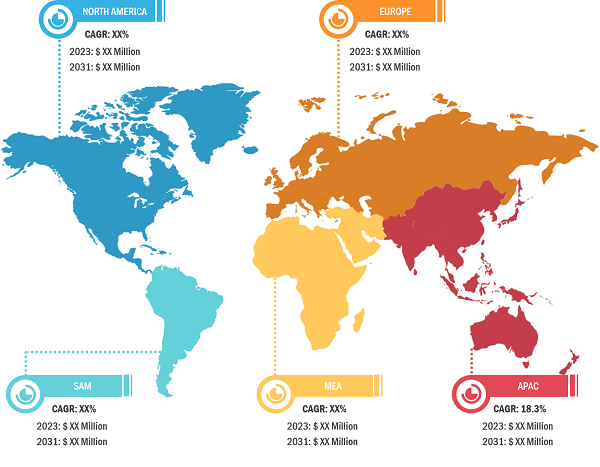
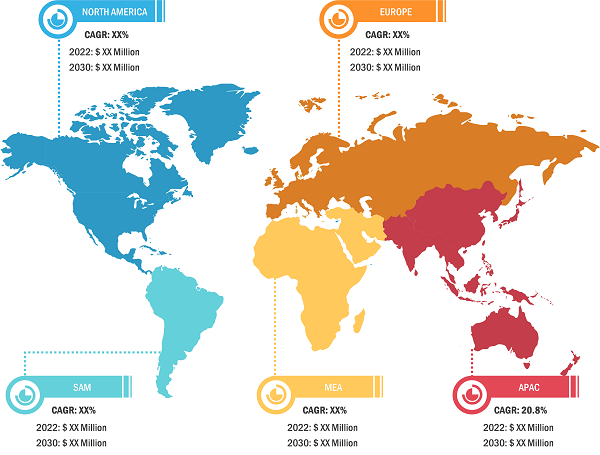
The global HVAC controls market is segmented into five major regions—North America, Europe, APAC, the Middle East & Africa, and South America. In 2022, Asia Pacific led the global HVAC controls market with a substantial revenue share, followed by North America and Europe. The HVAC controls market in APAC is segmented into China, India, Japan, Australia, South Korea, and the Rest of APAC. The unpredictable weather and rising temperatures have encouraged consumers to adopt HVAC control systems. HVAC systems also improve the visual value of commercial and residential spaces. Several companies provide appealing products to customers, allowing them to select from various designs. The advent of cutting-edge designs and altering preferences of consumers are anticipated to boost the demand for HVAC controls in the coming years. APAC also has the world’s fastest economic growth rates. The expanding heavy construction sector due to increasing population and rising per capita disposable income will benefit the APAC construction industry. The increased construction operations in China, India, and several other nations in APAC will also fuel the deployment of HVAC controls, thereby favoring the overall HVAC controls market outlook.
HVAC Controls Market: Competitive Landscape and Key Developments
Carrier, Daikin, Delta Controls, Distech Control Inc., Emerson Electric Co., Honeywell International Inc, Johnson Controls, Lennox International Inc, Siemens, and Schneider Electric are among the leading market players profiled in the HVAC controls market report. Several other essential market players were analyzed for a holistic view of the market and its ecosystem. The report provides detailed market insights, which help the key players strategize their market growth. A few developments are mentioned below:
- In June 20222, Johnson Controls entered into collaboration with Accenture to deliver and operate across its two latest OpenBlue Innovation centers. This will expedite the development of AI-driven building control systems.
- In January 2022, Distech Controls, an Acuity Brands Inc’s brand, entered into a strategic agreement with HTS Engineering, a HVAC solutions provider in North America. HTS, being the largest full-service HVAC distributor in North America, with Distech will provide a unified building automation solution.