Redistribution Layer Material Market
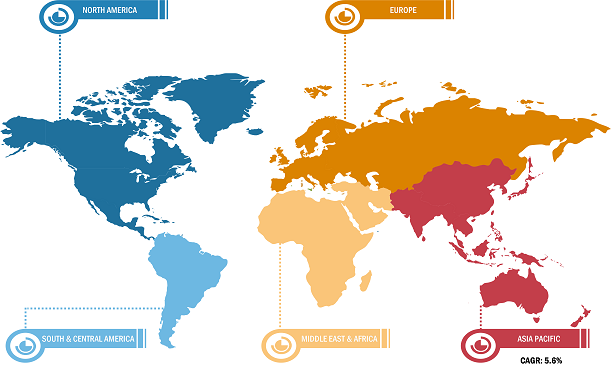
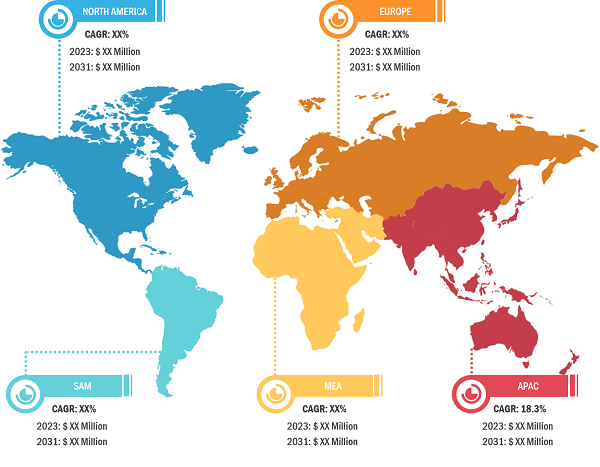
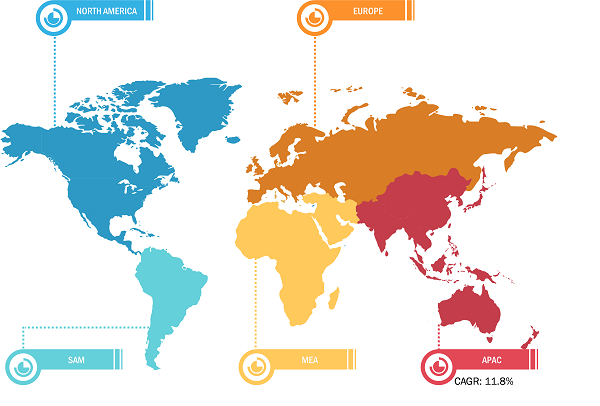
In 2022, Asia Pacific held the largest share of the global redistribution layer material market. The region is considered a global manufacturing hub owing to the presence of diverse manufacturing industries. With China’s evolution into a high-skilled manufacturing hub, developing countries such as India, South Korea, Taiwan, and Vietnam are attracting several businesses that plan to relocate their low to medium-skilled manufacturing facilities to neighboring countries, which results in reduced labor costs. As per the study by the Semiconductor Industry Association, ~75% of global semiconductor capacity is based in East Asia. Semiconductor companies will benefit from a cost advantage of 25% to 50% with the start of manufacturing activities in the region.
Growing Focus on AI-based Equipment and Tools Bolsters Redistribution Layer Material Market Growth
Redistribution layer (RDL) materials are fundamental in enabling the miniaturization of semiconductor packages, which is essential to accommodate the increasing complexity of AI devices. The quest for more advanced AI capabilities necessitates the development of compact and densely integrated hardware components. As AI systems become more sophisticated, the demand for smaller and more efficient components grows. In addition, AI applications are known for conducting high-performance computing, which inherently generates substantial heat. Also, the growing preference for redistribution layer material by the automotive and robotics industries propels the demand for redistribution layer material. Thus, the growing focus on AI-based equipment and tools bolsters redistribution layer material market growth.
Redistribution Layer Material Market: Segmental Overview
Based on type, the redistribution layer material market is segmented into polyimide (PI), polybenzoxazole (PBO), benzocylobutene (BCB), and others. The polyimide (PI) segment held the largest market share in 2022. Polyimides are polymer-based thermoplastics with a high melt viscosity and require higher pressures for forming molded parts. Polyimides offer good chemical resistance, high mechanical strength, higher thermal stabilities, and exceptional electrical properties. For the IC packaging methods, polyimides are used as high-temperature adhesives, mechanical stress buffers, and as a film supporting the micro-sized circuitry. Polyimides require higher cure temperatures, which is its major drawback, as packaging demands lower cure temperatures. Several material suppliers have thus focused on providing polyimides with lower cure temperatures. PI is majorly used in all the flip-chip wafer bumping and WLP applications. Based on application, the redistribution layer material market is bifurcated into fan-out wafer level packaging (FOWLP) and 2.5D/3D IC packaging [high bandwidth memory (HBM), multi-chip integration, package on package (FOPOP), and others]. The redistribution layer material market share of the 2.5D/3D IC packaging segment was notable in 2022. The increased costs of lithography steps and wafer processing in general at the next-generation silicon nodes are driving the industry to find alternatives to improve the performance and functionality of electronic devices. Additionally, the need to integrate disparate technologies such as logic, memory, RF, and sensors in small form factors is driving the semiconductor industry toward 3D integration as a solution.
Impact of COVID-19 Pandemic on Redistribution Layer Material Market
Before the onset of the COVID-19 pandemic, the global redistribution layer material market recorded a growth trajectory. The region established itself as a significant player in the global semiconductor and electronics supply chain, with several countries hosting semiconductor manufacturing facilities, assembly plants, and R&D centers. However, the chemicals & materials industry reported an adverse impact of the pandemic during the first quarter of 2020. The crisis led to social distancing restrictions and economic fallout, restricting redistribution layer material manufacturing and distribution. Moreover, low-income and mid-income consumers faced financial difficulties in the initial months of 2020 owing to the economic recession caused by the COVID-19 pandemic. As a result, people only purchased primary essential products, which declined the sales of redistribution layer material.
Redistribution Layer Material Market: Competition Landscape